The Spice Counterpoint
A little heat can sharpen mango’s sweetness. Toasted earthiness can give it depth. Fragrant spice can make the finish linger. Let each do one job well.
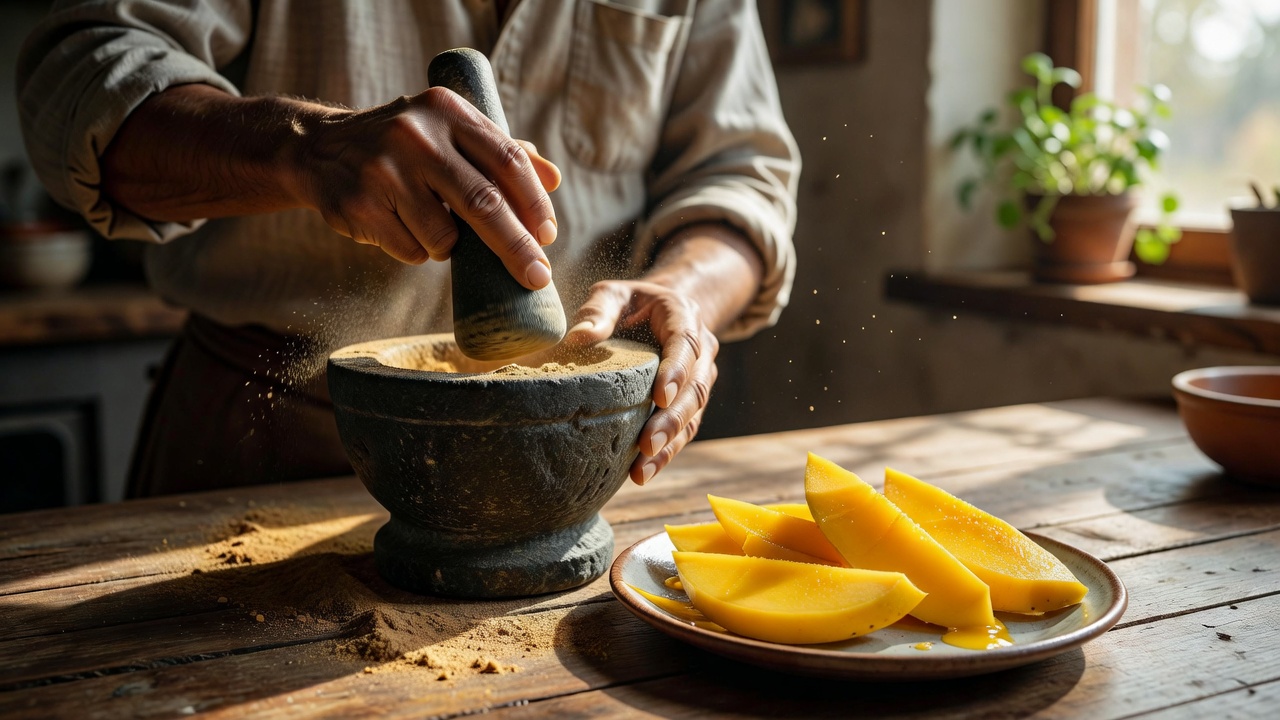
Separate heat from fragrance
Spices do not all create the same kind of intensity. Chili supplies a lingering burning sensation. Ginger offers a sharper, often quicker prickle alongside a bright aroma. Cumin contributes earthy, toasted notes without needing chili heat. Cardamom is intensely fragrant but not hot in the same way. Naming the job you want a spice to do makes it easier to choose—and easier to stop adding it.
Begin with a plain mango cube, then season another cube very lightly. Compare the two rather than tasting the seasoned bite in isolation. The pairing succeeds when you notice more of the mango or enjoy a useful contrast. If the fruit disappears, that is a dosage problem, not proof that you need an even more complicated spice blend.
Chili, lime and a clear fruit center
Ripe mango welcomes chili because sweetness and heat create an engaging contrast. Lime adds an acidic edge, while a little salt makes the whole bite more defined. Try a small pinch of mild ground chili on a plate of mango, then add citrus gradually. Heat varies dramatically among chili products, so a universal spoonful is not a useful starting instruction.
Read seasoning labels. Some products already contain salt, citric acid or sugar. Tajín Clásico, for example, is a prepared chili-lime seasoning rather than plain chili powder; taste before adding extra salt or lime. Likewise, products sold as “chili powder” may be single ground peppers or mixed seasonings depending on where you shop. Knowing what is in the jar is more valuable than following a rigid ratio.
Cumin and coriander: the toasted register
Cumin is especially useful with firm or partly ripe mango, where earthy depth has a tart, crisp partner. Toast whole seeds gently in a dry pan, moving them often, and stop when they smell fragrant. Tip them onto a cool plate immediately; the heat of the pan can keep cooking them. Burnt cumin tastes bitter and will not become pleasant simply because the fruit is sweet.
Crush a few cooled seeds and test them with mango, lime and a little mild oil. Ground coriander seed can bring a rounder, citrus-like fragrance to the same mixture. It is different from fresh cilantro leaf even though both come from the coriander plant. A little of either spice can anchor a cabbage slaw or a chickpea-and-mango bowl without making it feel like dessert.
Amchur, made from dried unripe mango, is a useful reference point in Indian cooking: mango can contribute acidity as well as sweetness. It is not a direct substitute for fresh mango pieces, and adding it to an already tart green-mango salad may be unnecessary. Taste for balance rather than doubling up on an idea.
Ginger, cardamom and the aromatic route
Fresh ginger works in both sweet and savory preparations. Grate a small amount into lime juice before folding it through mango, or blend it into a dressing with very soft fruit. Fibrous ginger can leave unpleasant threads, so grate finely or strain the mixture when you want a smooth sauce. Begin with a little; standing time can make the ginger feel more prominent.
Cardamom offers a floral, citrus-like intensity that can echo ripe mango’s perfume. Crush the seeds from a pod and use only a few grains in a trial portion of plain yogurt and mango. Too much can make the bowl taste perfumed rather than fruity. Cinnamon gives a warmer, more familiar dessert direction, while freshly ground black pepper creates a dry, gently prickling finish that is especially interesting with mango and pineapple.
Correct the balance without chasing it
If a bowl tastes too spicy, increasing its volume with unseasoned mango or cucumber is usually more reliable than adding sugar. A creamy accompaniment can change the eating experience, but it does not remove the chili. If the seasoning feels dusty, it may need a little moisture or oil—or simply less ground spice. If the result is bitter, consider whether a toasted ingredient burned.
Keep small tasting notes: mango ripeness, the spice used, and what you would change next time. You do not need exact laboratory measurements to learn from a meal. “Half as much cumin; more cucumber; lime at the end” is a useful record. Once one spice feels balanced, you can try a second. Leave enough quiet space for the fruit to remain the main event.