Mango Meets Fresh Herbs
A leaf can make ripe mango feel lighter, more savory or unexpectedly floral. The trick is to choose the direction before adding the whole handful.
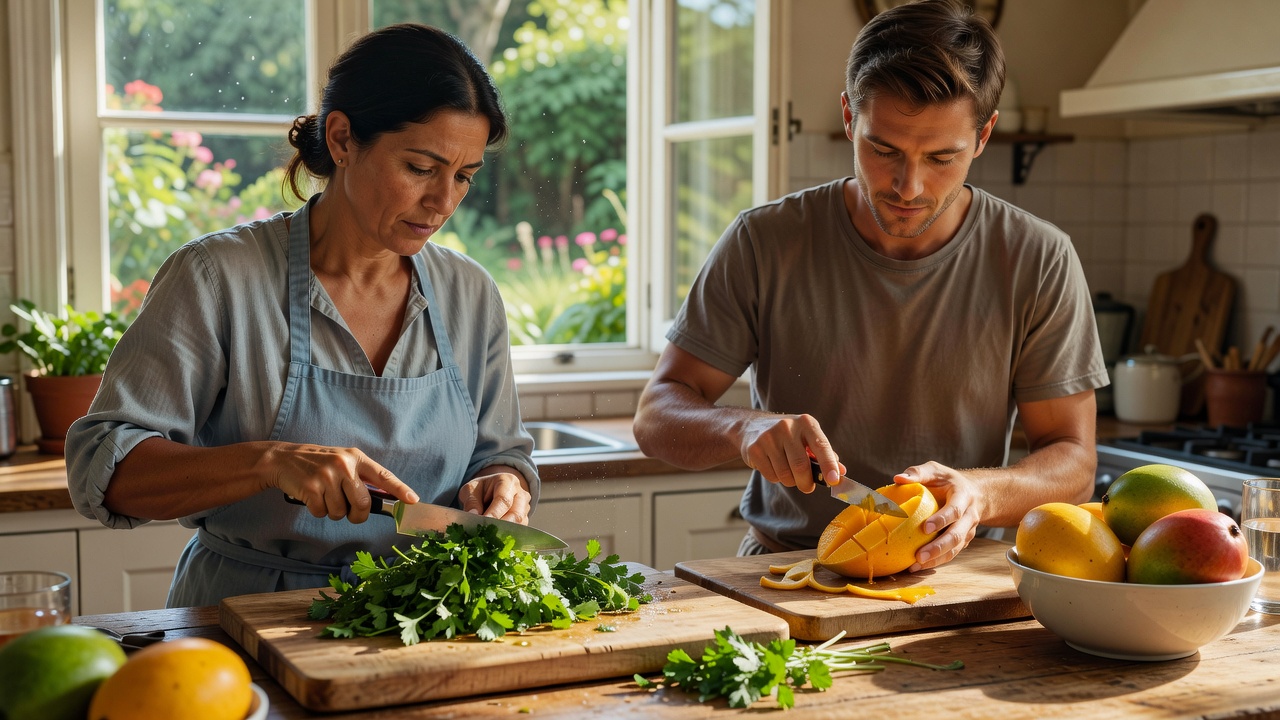
Listen to the fruit first
Cut a small piece before choosing your herbs. Does the mango taste honeyed, tart, resinous, peach-like or almost floral? These impressions vary with cultivar, growing conditions and ripeness. An Ataulfo may offer a smooth, rich bite; a Kent or Keitt can bring a different balance of firmness and fragrance. None of those names replaces tasting. Your particular fruit is the ingredient that matters.
Herbs work through both contrast and reinforcement. A fresh, green aroma can interrupt sweetness, while a floral or citrus-like note can echo something already present in the mango. Start with a single leaf and a cube of fruit. Chew them together, pause, and notice the finish. If the herb is all you remember, reduce it before building a larger dish.
Mint: a clean, cool impression
Mint is a forgiving starting point because its fresh aroma gives ripe mango a lively outline. Spearmint is often gentler than peppermint, although strength varies. Tear a few small leaves rather than crushing a large bunch into a dark paste. Torn leaves keep the salad visually fresh and release enough fragrance for the first bites.
For a simple bowl, combine one diced mango with roughly half a cucumber and a few torn mint leaves. Add lime juice a teaspoon at a time, then a small pinch of salt. Taste the liquid at the bottom as well as the solids. It should be bright without making your mouth pucker. If you want a little richness, add a modest drizzle of mild olive oil rather than more fruit.
Basil: a fragrant bridge
Sweet basil has a soft, peppery perfume that can link mango to tomato. Thai basil often brings a more pronounced anise-like character, so begin with less. These are not interchangeable experiences, and neither is inherently better. Choose sweet basil for a gentle salad and Thai basil when you want a more assertive aromatic accent.
Cut ripe but firm mango into pieces about the size of your tomato wedges. Dress the tomatoes lightly with salt and a little oil, then fold in mango and basil just before serving. The tomatoes supply acidity, although a few drops of lime may still help. Keep the dressing spare: the goal is to taste the juices meeting, not to cover them. Soft mozzarella or cooked white beans can turn the plate into a more substantial lunch.
Cilantro, dill and the stronger voices
Cilantro moves mango toward a savory relish. Its leaves bring a distinctive green, citrus-like aroma; tender stems add a little crunch when finely sliced. If cilantro tastes unpleasantly soapy to you, leave it out. Mint or a small amount of flat-leaf parsley can offer a different but useful green accent. There is no culinary prize for forcing yourself to enjoy an herb.
Dill deserves a cautious trial with mango and cucumber. Its grassy, anise-like fragrance works best against firm fruit, gentle acidity and a creamy element such as plain yogurt. Rosemary and sage are much more forceful. Instead of scattering raw chopped leaves over a salad, briefly infuse a small sprig into warm oil, remove it, and taste a drop with the mango. A suggestion of fragrance is often enough.
Mango appears alongside fresh herbs in many contemporary kitchens, while green-mango salads and relishes have long histories across South and Southeast Asia. Thai yam mamuang and Vietnamese gỏi xoài are useful dishes to learn about, not labels to apply to every mango salad. Their seasonings, textures and local variations deserve more attention than a borrowed name on an improvised bowl.
Finish gently, then serve
Wash herbs under running water and dry them well. Wet leaves dilute dressing and can cling together in the bowl. Use a sharp knife if chopping; repeated heavy cuts bruise tender herbs and darken their edges. Keep delicate leaves separate if you are preparing ingredients ahead, and fold them in shortly before eating.
When a combination feels too perfumed, add more mango or a neutral, crisp ingredient such as cucumber. When it tastes flat, test a drop of citrus juice before adding more herbs. When every bite is identical, vary the cut: larger mango pieces and smaller herb fragments create a more interesting rhythm. Your aim is not maximum intensity. It is a bowl that invites another bite.