Fruit Duets Worth Trying
Some fruits echo mango’s sunny perfume. Others bring a tart, bitter or creamy reply. Choose a relationship, not just a rainbow of ingredients.
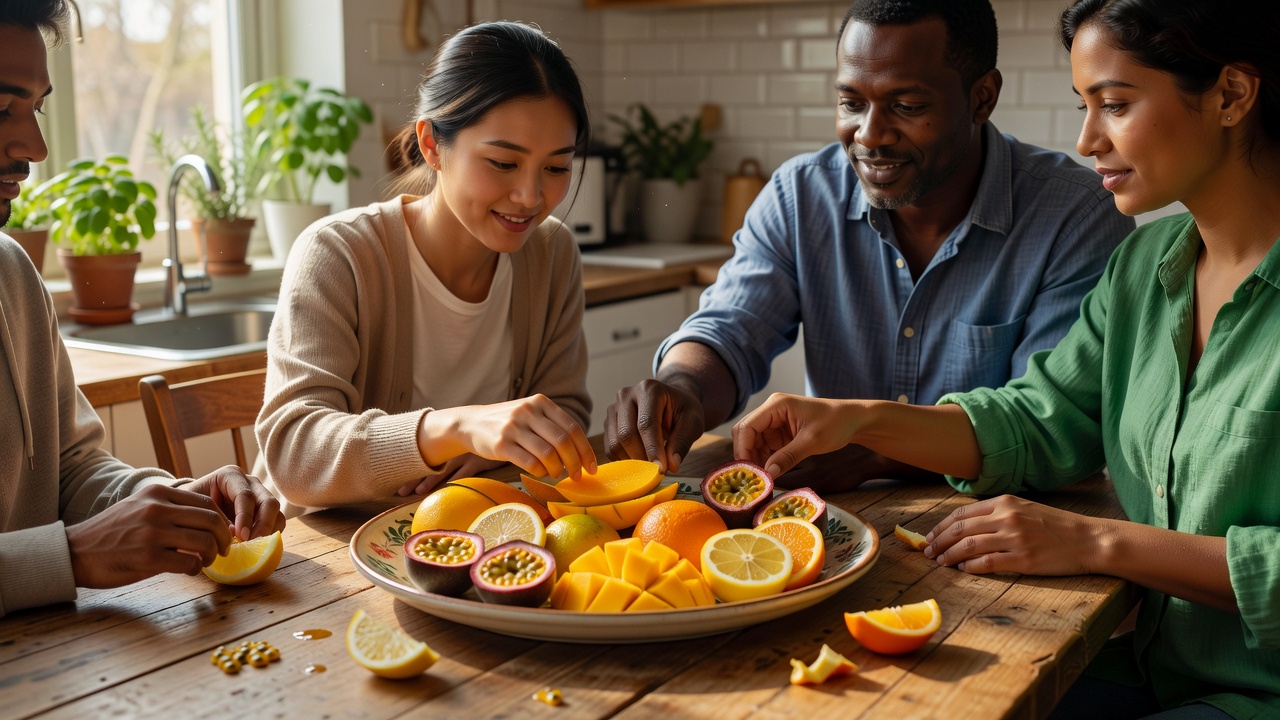
Decide what the second fruit should do
A fruit bowl can become muddled when every ingredient is soft and sweet. Before adding another fruit, decide whether you need acidity, fragrance, bitterness, crunch or richness. Ripe mango already supplies plenty of body and sweetness. The most useful partner may be one that contributes less sugar-like intensity and a more distinct edge.
Taste both fruits separately, then together. If their combined juice is balanced, leave it alone. Added honey or syrup is a choice, not a required finishing step. If the mixture needs brightness, a few drops of lime may be more effective than a third sweet fruit. Keeping the first experiment to two fruits makes the result much easier to understand.
Pineapple: reinforce the tropical register
Pineapple shares mango’s generous, tropical impression but usually brings a sharper acidic bite and a firmer texture. Use ripe pineapple with a pleasant aroma rather than expecting mango to disguise underripe fruit. Cut away tough core sections if they are unpleasantly fibrous. Slightly smaller pineapple pieces allow the softer mango to stay present in each mouthful.
Try equal amounts as a first test, then adjust toward the fruit you want to lead. Fresh ginger adds energy; mint adds a lighter finish. Grilling pineapple separately creates browned notes that contrast with uncooked mango. Let the grilled fruit cool slightly before combining, and do not add syrup automatically. Browning and concentrated juice may already make the pairing feel quite rich.
Passion fruit and citrus: a bright reply
Passion fruit is potent enough to behave almost like a dressing. Its tart pulp and intense aroma can lift very ripe mango without requiring a large volume. Start with a spoonful, fold it through and taste. The seeds provide a distinctive crunch; strain the pulp if you want a smooth sauce. Both versions are useful, but they create different textures.
Lime is the simplest citrus partner when you want to brighten mango without adding many more pieces to the bowl. Orange is gentler and can make a mellow duet, especially if the mango is already a little tart. Grapefruit introduces bitterness as well as acidity. Remove tough membranes if you want clean, juicy segments, and use modest quantities until you know how much bitterness you enjoy.
Grapefruit can interact with some medicines. If that applies to you, check your medicine guidance or ask a pharmacist before choosing it as an ingredient. Orange or lime may provide a different culinary route, but they are not automatic medical substitutes; follow advice relevant to your medication.
Berries, banana and coconut
Strawberries bring acidity and a different kind of perfume. They work especially well when both fruits are ripe enough to be expressive but still hold their shape. Cut the strawberries into halves or quarters and keep the mango pieces generous. A little basil can connect the aromas. If the berries are bland, sugar may make them sweeter but will not create the fragrance that is missing.
Banana is useful when you want softness and body, particularly in a blended drink. In a fruit salad, however, banana and very ripe mango can feel uniformly heavy. Add a tart fruit or choose firmer mango, and slice the banana close to serving. Blending is not a failure of a pairing; it is simply a different textural goal.
Coconut is a particularly rich partner. Unsweetened coconut milk makes a rounded sauce, toasted coconut flakes add dry crunch, and fresh coconut contributes a firmer bite. These ingredients do not perform the same job. Check whether packaged coconut is sweetened, and be mindful of allergies and individual dietary needs when serving a shared dish.
Compose a bowl with room to breathe
A reliable structure is mango plus one contrasting fruit, followed by one optional accent. Mango, passion fruit and ginger make a vivid combination. Mango, strawberry and basil feel fragrant and fresh. Mango, pineapple and toasted coconut lean richer and more tropical. Each has a clear center; none needs five more ingredients to look generous.
Serve at a temperature that suits the preparation. Refrigerated fruit is refreshing, but very cold food can seem less aromatic. Let a small serving lose its extreme chill briefly if you want to notice more fragrance, while keeping the rest properly refrigerated. Cut fruit should not be left sitting out through a long gathering. Bring out smaller portions and replenish from the refrigerator.
If a bowl tastes flat, check acidity and temperature before adding sweetener. If it tastes sharp, try more ripe mango rather than immediately pouring in syrup. If it tastes rich, add a crisp garnish or reduce the creamy element. Pairing is an ongoing adjustment to real fruit, not a fixed formula that every mango must obey.